Oct 28, 2026
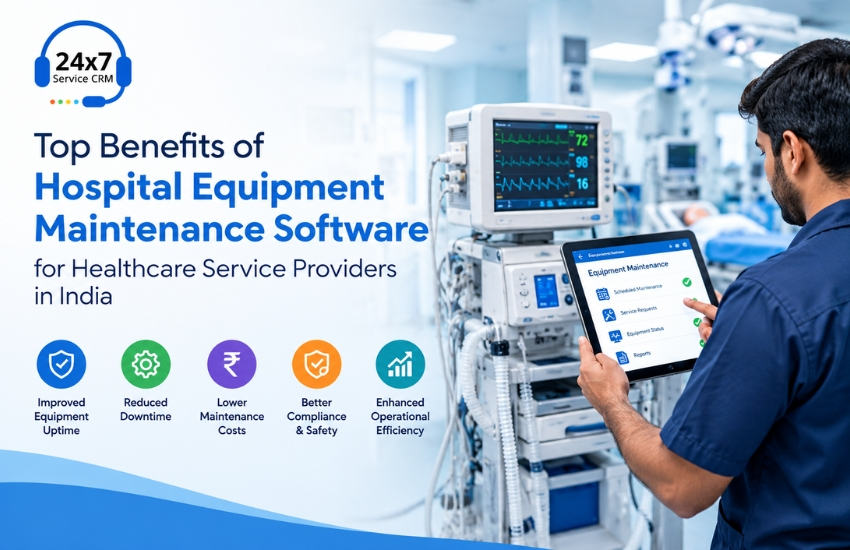
The healthcare industry in India is rapidly adopting digital solutions to improve patient care, operational efficiency, and equipment reliability. Medical devices such as diagnostic equipment, patient monitoring systems, ventilators, and laboratory instruments play a vital role in supporting accurate medical assessments, delivering quality patient care, and ensuring efficient healthcare services. However, managing maintenance schedules, medical equipment breakdowns, service requests, and repair records manually can create operational big challenges.
Medical Equipment Maintenance Software Service CRM provides an effective solution for simplifying equipment servicing, organising maintenance tasks, and enhancing overall service management productivity. It helps healthcare organisations streamline preventive maintenance, manage service requests, track equipment performance, and maintain organised service records. With the support of Hospital Equipment Maintenance Software, healthcare service providers can reduce avoidable downtime, improve maintenance planning, and make informed operational decisions.
Solutions such as Service CRM software can further support service teams by centralising customer information, real-time tracking, automating workflows, and improving coordination between technicians, service managers, and healthcare facilities.
In this blog, we explore the top benefits of hospital equipment maintenance software and explain how healthcare service providers in India can use it to improve equipment servicing and maintenance operations.
Hospital Equipment Maintenance Software Service CRM provides a centralized digital platform that enables healthcare facilities and medical equipment service providers to efficiently organize, monitor, and manage equipment maintenance activities throughout their service lifecycle. It provides a centralised platform for recording equipment details, scheduling preventive maintenance, assigning technicians, tracking repair requests, and maintaining service histories.
Compared to traditional paper records and spreadsheets, modern Service CRM software helps businesses automate routine workflows, streamline daily service operations, and track maintenance activities in real time for better efficiency and coordination. Depending on its features, it may also support mobile access, work order management, inventory tracking, reporting, and customer communication.
Medical Equipment Management Software Service CRM can extend these capabilities by helping organisations monitor equipment availability, service history record, maintenance costs, and asset performance from one place.
For healthcare businesses managing multiple facilities or a large installed equipment base, this centralised approach can make maintenance operations more structured and easier to monitor.
Preventive maintenance helps identify potential equipment issues before they develop into major breakdowns. However, tracking service intervals for multiple devices manually can be time-consuming and prone to errors.
Hospital Equipment Maintenance Software allows teams to create maintenance schedules based on time intervals, usage requirements, or manufacturer recommendations. Automated reminders help maintenance managers plan inspections, servicing, and routine checks in advance.
This approach helps healthcare organisations:
Regular preventive maintenance supports equipment reliability and helps teams identify developing actual problems before they cause unnecessary disruption.
Unexpected equipment breakdowns can disrupt hospital business operations, delay diagnostic procedures, and place additional pressure on technical teams. Delayed repairs may also affect patient services and staff productivity.
Medical Equipment Maintenance Software helps teams record faults, create work orders, assign technicians, and monitor repair progress. Managers can identify pending tasks and follow up on service requests that require immediate attention.
When combined with clear escalation processes and appropriate spare-parts planning, these capabilities can help reduce avoidable delays.
For healthcare service providers in India managing medical equipment across multiple locations, a centralised repair management system with real-time tracking helps identify recurring technical issues, monitor service progress, and prioritise urgent maintenance tasks efficiently.
Software cannot eliminate every equipment failure, but it can help organisations respond more systematically when issues arise.
Medical equipment service teams often work across hospitals, clinics, laboratories, and diagnostic centres. Without an efficient management system, organising technician schedules, coordinating service appointments, maintaining customer communication, and managing repair records can become challenging and time-consuming.
A platform such as Service CRM can help streamline these activities by bringing service requests, customer details, work orders, and technician assignments together.
Depending on the available features, technicians and service managers can:
With mobile accessibility, field technicians can enter and update service information while working at customer locations, helping maintain accurate records and ensuring maintenance activities are tracked in real time.
By automating routine paperwork and simplifying service processes, digital workflows help technicians spend less time on administrative tasks and more time maintaining equipment and delivering quality customer service.
Maintaining accurate records is essential when an organisation manages a large number of medical devices. Information such as installation dates, warranty details, previous repairs, maintenance schedules, and replacement history can become scattered across spreadsheets, emails, and paper files.
Medical Equipment Management Software provides a central location for storing and accessing equipment information.
A structured equipment record may include:
This information helps maintenance managers understand the history of individual devices and make better decisions about future servicing, repair requirements, and equipment replacement.
It can also help service teams investigate recurring faults without relying entirely on manual record searches.
Healthcare organisations rely on medical equipment service providers for prompt responses, clear communication, and reliable technical assistance to maintain smooth healthcare operations. When service requests are handled through disconnected channels, it can become difficult to track progress or communicate accurate updates.
Hospital Equipment Maintenance Software can provide a structured process for recording service requests, assigning responsibility, monitoring status, and documenting resolution.
By integrating customer relationship management (CRM) capabilities, Service CRM helps businesses maintain organised customer information and access previous service interactions through a single platform.
For example, service managers can review unresolved complaints, identify tasks awaiting technician assignment, monitor spare parts availability, and track customer requests requiring approval.
Having all service-related information in one place strengthens teamwork, improves customer communication, and allows businesses to manage maintenance requests efficiently while reducing delays and overlooked follow-ups.
Maintenance and repair expenses can increase when businesses depend heavily on emergency repairs, lack proper spare parts management, or send technicians for repeated service visits because of incomplete or incorrect job information.
Medical Equipment Maintenance Software can help organisations analyse maintenance activities, identify recurring faults, and monitor repair-related expenses.
Managers can use available reports to review:
These valuable insights help organisations plan maintenance budgets, optimise resource utilisation, and make informed decisions about repairing or replacing ageing medical equipment. However, potential cost reductions may vary depending on the type of equipment, maintenance procedures, software functionality, and effectiveness of implementation. Nevertheless, having reliable service data provides a stronger foundation for financial decisions.
Healthcare organisations need reliable documentation of equipment servicing, inspections, repairs, and maintenance activities. Missing or inconsistent records can make internal reviews and external audits more difficult.
Medical Equipment Maintenance Software Service CRM helps maintain organised service histories and supporting documentation. Maintenance teams can use a centralised platform to document service schedules, inspection findings, completed repair activities, and any additional maintenance tasks requiring follow-up.
These records can help organisations prepare for audits and demonstrate that maintenance activities are being monitored. However, software alone does not guarantee regulatory compliance.
When implementing a maintenance management system, providers should also prioritize role-based access, regular data backups, and robust security controls to protect sensitive information and maintain reliable system operations.
Preparing reports manually can be a lengthy and demanding process, especially when managers must gather, organise, and analyse data from different service centres, locations, or departments. Digital reporting tools simplify this process by converting service records into actionable insights that support better planning and operational decisions.
Depending on the software, dashboards and reports may show open service requests, overdue maintenance, completed work orders, technician workloads, recurring equipment faults, and maintenance expenditure.
These insights help managers identify bottlenecks, compare performance across locations, and make informed decisions about staffing, maintenance priorities, and service processes.
As healthcare organisations expand into new cities and establish additional hospitals or diagnostic centres, managing medical equipment maintenance across multiple locations becomes increasingly complex.
A flexible Medical Equipment Management Software platform helps healthcare organisations manage equipment records from a single location while ensuring consistent maintenance procedures and efficient service coordination across multiple healthcare facilities.
With a unified management platform, service managers can streamline operational workflows, coordinate maintenance activities, and monitor the performance and completed tasks of service teams working at various locations.
Before implementation, organisations should evaluate user permissions, multi-location reporting, integrations, mobile functionality, and the ability to accommodate additional equipment and users.
Service CRM can complement Hospital Equipment Maintenance Software by connecting customer management with service operations. While maintenance functionality focuses on equipment, inspections, repairs, and servicing schedules, CRM capabilities help manage customer relationships and service communication.
For medical equipment manufacturers, suppliers, and third-party maintenance service providers, combining CRM capabilities with service management tools improves communication, simplifies workflow coordination, and supports more efficient service operations.
For instance, when a hospital reports faulty equipment, the service team can log the complaint, access customer and device information, allocate the job to a suitable technician, and monitor progress until the repair is completed. Maintaining detailed medical device service records also helps organisations schedule upcoming inspections, organise preventive maintenance activities, AMC remainders and make informed maintenance decisions.
Based on the features available, Service CRM can further assist businesses in tracking customer follow-ups, managing maintenance agreements, evaluating technician productivity, and monitoring unresolved service requests.
Before choosing a software solution, healthcare service providers should carefully review its available features to ensure they meet their business needs, as not all CRM platforms offer dedicated medical equipment maintenance management capabilities.
Choosing the right Medical Equipment Maintenance Software involves evaluating essential features, functionality, ease of use, and compatibility with business requirements rather than focusing solely on pricing.
Healthcare organisations should consider their equipment portfolio, maintenance complexity, number of service locations, and existing technical workflows.
Look for the following capabilities:
It is also important to assess ease of use, onboarding support, customisation options, and the provider's ability to support future growth.
Hospital Equipment Maintenance Software is becoming an important tool for healthcare organisations and medical equipment service providers seeking better control over maintenance activities. From preventive maintenance scheduling and repair tracking to centralised records, technician coordination, and reporting, digital workflows can make equipment servicing more organised and transparent.
Medical Equipment Maintenance Software helps teams plan maintenance proactively, while Medical Equipment Management Software supports a more complete view of equipment information and service history. When supported by Service CRM capabilities, organisations can also improve customer communication and coordinate service requests more effectively.
For healthcare service providers in India, the right software should align with operational needs, support reliable documentation, and offer room for future growth. A carefully implemented maintenance management system can streamline equipment operations, improve team productivity, and support the consistent delivery of reliable healthcare services.
Q. 1. What Is Medical Equipment Maintenance Software?
Ans: Medical Equipment Maintenance Software is a digital solution designed to streamline healthcare equipment servicing by organising preventive maintenance schedules, repair activities, technician assignments, customer service requests, and detailed equipment maintenance records within a centralised system.
Q. 2. How Does Hospital Equipment Maintenance Software Help Minimise Downtime?
Ans: Hospital Equipment Maintenance Software helps healthcare facilities reduce equipment downtime by simplifying scheduled maintenance, identifying pending service tasks, monitoring equipment failures, and improving coordination between maintenance teams and technicians for timely repairs.
Q. 3. What is the difference between Medical Equipment Maintenance Software and Medical Equipment Management Software?
Ans: Maintenance software primarily focuses on servicing, inspections, repairs, and maintenance schedules. Equipment management software generally provides comprehensive asset management capabilities, including equipment details, warranty information, asset locations, usage monitoring, and lifecycle management. However, available features depend on the software provider and selected solution.
Q. 4. Can Service CRM Be Used by Medical Equipment Service Companies?
Ans: Yes, Service CRM can support medical equipment service providers by simplifying customer management, service complaint handling, technician allocation, work order processing, and service follow-ups. The availability of these functions depends on the specific software features and configuration.
Q. 5. What Should Healthcare Providers Consider Before Choosing Maintenance Software?
Ans: Healthcare organisations should evaluate essential features such as preventive maintenance planning, service request management, equipment history tracking, mobile accessibility, performance reporting, data security, and integration capabilities. Choosing a user-friendly and scalable solution that meets operational and documentation needs can help improve maintenance efficiency and service quality.







Instant free download from Play Store and Apple. Service CRM is one the best Software or Application for field service management. You can book a demo Online.